

EMERGENCY SERVICES
12-Week AI Readiness Programme: From Exploration to Operational Capability

12 Weeks to Operational AI Capability.
Kablamo developed a productised 12-week AI readiness programme for emergency services organisations, building on years of delivering bushfire intelligence platforms for agencies including the NSW Rural Fire Service and DEECA Victoria. The programme takes organisations from AI exploration to working prototypes with governance frameworks.
“The accelerator is designed to move organisations from AI curiosity to operational capability in 12 weeks - not through theory, but by building real prototypes against real data.”
Enterprise AI Accelerator Programme, AI Readiness for Emergency Services
The Challenge
Emergency services organisations across Australia and North America generate enormous volumes of operational data: incident records spanning decades, sensor networks feeding real-time conditions, satellite and aerial imagery, weather station outputs, social media intelligence, and GPS tracking from thousands of personnel and vehicles. The potential for AI and machine learning to extract actionable intelligence from this data is significant: predictive incident modelling, automated resource allocation, early warning systems, and natural language search across operational archives.
But most agencies have not progressed beyond exploration. Isolated AI pilots run by individual teams. Vendor demonstrations that show impressive capabilities but don't connect to real operational data or workflows. Innovation labs that produce proof-of-concepts which never reach production because the governance, training, and infrastructure required to operate AI responsibly in high-stakes environments was never established.
Kablamo identified this pattern through years of delivering the bushfire intelligence platform for bushfire intelligence, working directly with the NSW Rural Fire Service (where the Athena platform tracks 15,000+ fire incidents and predicts fire spread within minutes) and DEECA Victoria (where the cloud-based fire analysis and risk modelling platform increased modelling capacity significantly). The gap was consistent across every agency: organisations understood AI's potential but needed a structured, repeatable path from exploration to production, one that addressed not just the technology, but the people, processes, and governance required to sustain AI operations in environments where decisions affect public safety.
The Approach
Kablamo developed the Enterprise AI Accelerator as a productised 12-week programme that takes organisations from problem identification through to working prototypes backed by governance frameworks and trained staff. The programme is structured around three phases.
Phase 1 - Discovery and Alignment: Kablamo works with agency leadership, operational commanders, data custodians, and frontline staff to identify the highest-value AI use cases. This involves mapping existing data sources and assessing quality, accessibility, and integration points. Potential use cases are aligned with operational priorities and strategic goals, then ranked by impact, feasibility, and data readiness. The output is a prioritised backlog of AI opportunities, not a theoretical roadmap, but a practical sequence of prototypes that can demonstrate value within the programme timeframe.
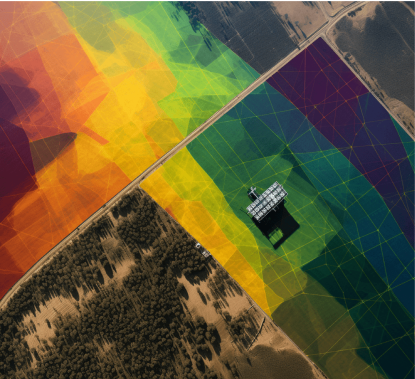
Phase 2 - Rapid Prototyping: Kablamo engineers build working prototypes against real agency data. These are not vendor demos or simulations running on sample datasets; they are functional systems that process the agency's actual operational data and demonstrate measurable value against the identified use cases. Common prototypes include predictive incident modelling (using historical incident data to forecast risk patterns), automated resource allocation (optimising crew deployment based on predicted conditions), geospatial intelligence overlays (combining satellite, sensor, and social media data on operational maps), and natural language search across decades of operational records.
Phase 3 - Governance, Training, and Roadmap: The final phase focuses on making AI sustainable within the organisation. Kablamo delivers responsible AI governance frameworks covering data handling protocols, model monitoring and performance tracking, bias detection and mitigation, human-in-the-loop decision-making gates, and escalation paths for low-confidence outputs. Hands-on training equips operational staff to use the prototypes effectively. A phased roadmap charts the path from prototype to production deployment, with clear milestones, infrastructure requirements, and resource estimates.
The programme builds on Kablamo's bushfire intelligence platform architecture, a proven foundation for geospatial AI in emergency services that has been deployed at scale across Australian fire agencies. Components, architectural patterns, and infrastructure from bushfire intelligence are adapted for each agency's specific context, dramatically reducing the time and risk of building from scratch. The accelerator uses the same AWS serverless infrastructure, machine learning pipelines, and geospatial data processing capabilities that power operational bushfire intelligence for thousands of firefighters.
The Programme Offering
Note: This case study describes a productised programme offering, not a single delivered engagement. The programme draws on Kablamo's operational experience with Australian fire agencies.
The Enterprise AI Accelerator provides emergency services organisations with a structured, repeatable path to operational AI capability. In 12 weeks, agencies move from exploratory discussions to working prototypes validated against real operational data, backed by governance frameworks that address the responsible deployment requirements of public safety environments.
The productised model means Kablamo can deploy the programme consistently across multiple agencies while tailoring the specific use cases, data sources, and governance requirements to each organisation's context. Agencies receive not just technology prototypes but the governance documentation, training materials, and implementation roadmap needed to move from prototype into production, the critical transition where most AI initiatives stall.
The bushfire intelligence platform foundation provides a significant head start. Rather than building geospatial AI, data processing pipelines, and operational intelligence capabilities from scratch, the accelerator inherits battle-tested components that have proven their reliability at scale in active emergency operations. This reduces the programme's technical risk and allows the team to focus engineering effort on agency-specific use cases rather than foundational infrastructure.
Looking Forward
The Enterprise AI Accelerator represents Kablamo's evolution from bespoke project delivery to productised capability, packaging years of bushfire intelligence experience into a repeatable programme that any emergency services organisation can adopt. The accelerator has been positioned for deployment across Australian state agencies and North American emergency services organisations, extending Kablamo's fire and geospatial expertise into the broader emergency management AI market. As AI becomes essential infrastructure for public safety operations, the accelerator ensures agencies can move quickly, responsibly, and with confidence that the technical and governance foundations are built to scale.